

Organic cannabis products are cannabis flower and derivatives grown and handled with attention to cultivation inputs, product quality, and clear labeling. At Trinity Growers Co., our family-owned micro grow farm in Trinity County, California, has focused on estate-grown cannabis since 2016, using sustainable practices without pesticides or synthetic fertilizers.
If you are comparing organic cannabis products Trinity Growers Co. offers, start with the type of product you want and the information its label provides. Flower, edibles, and vape cartridges differ in format and use, so the best fit depends on your preferences, experience, and the product details you can verify. Our goal is to make that comparison easier, without treating a growing method as a promise of a particular effect.
Key takeaways
Choose by product format and label details, and distinguish a farm’s cultivation practices from a formal certification claim.
Organic cannabis products Trinity Growers Co.: how to choose
What the growing claim means
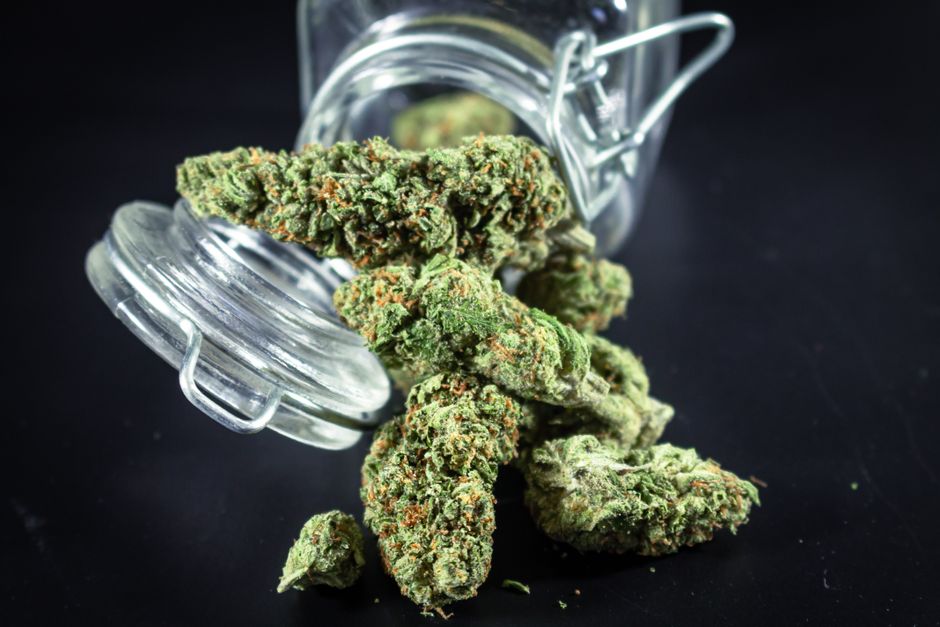
Organic cannabis is a common way to describe cannabis grown with practices that emphasize avoiding synthetic fertilizers and pesticides. It is not the same as a guarantee of a product’s effects, and the word alone does not establish that a crop or finished product holds a particular certification. California has specific rules for cannabis labeling, so look closely at the exact language used on a product.
According to Cal. Code Regs. Tit. 3, § 10103 – Use of the Terms Ocal and Organic, no cannabis or nonmanufactured cannabis product shall be advertised or labeled OCal or similar terminology that leaves in doubt whether the product is being sold, labeled, or represented as certified pursuant to the requirements of this chapter. For shoppers, this makes precise labeling more useful than broad marketing language.
California also has a defined OCal pathway for certain manufactured products. According to Cal. Code Regs. Tit. 17, § 22055 – Cannabis Products Labeled Ocal, cannabis products manufactured with only OCal-certified cannabis and 95 percent or greater certified organic ingredients may be labeled “100 percent OCal,” or “OCal.” Do not infer that Trinity Growers Co. or any specific product is certified unless that status is expressly verified.
From cultivated crop to product format
Cannabis cultivation begins with the crop and its growing conditions. At Trinity Growers Co., our work is estate grown in Trinity County and follows a commitment to sustainable practices without pesticides or synthetic fertilizers. Those details describe our approach; they do not replace product-specific labeling or establish a third-party certification.
After harvest, the product format shapes what a customer needs to consider. Flower is the least processed option in this group. Edibles involve cannabis and food ingredients, so serving directions and ingredient information matter. Vape cartridges are a separate format, and their product details should be read rather than assumed from the source crop alone.
For a closer look at our approach to sustainable cannabis farming, review how cultivation practices relate to the farm’s broader production choices. California’s organic market is substantial: according to the USDA Economic Research Service, 2022 Census of Agriculture: Sales of organic agricultural products concentrated in California, California had more than $3.7 billion in organic sales in 2022, almost 40 percent of the Nation’s organic sales. That statewide figure describes agriculture overall, not cannabis certification or any individual farm.
What shapes product choice and value

Format, ingredients, and handling
The first practical factor is how you prefer to use cannabis. Flower lets you inspect the dried material and its packaging information, while an edible offers a food-based format with directions that should be followed carefully. A vape cartridge has different ingredients and hardware, so check product-specific information instead of assuming that the growing method tells you everything about the finished item.
For edibles, the recipe matters as much as the cannabis source. California requires food components to come from compliant sources. According to Cal. Code Regs. Tit. 4, § 17212 – Cannabis Product Components, components that are food must be obtained from a source that complies with federal and state food laws.
If flavor, dietary needs, or ingredient transparency influence your choice, read the full package details and select a product whose information answers those questions.
The package and storage conditions also affect the experience of using a product. Keep cannabis in its original, clearly labeled packaging and follow the storage directions. To learn more about preserving product condition, see our guide to storing organic cannabis products. Heat, light, air, and moisture can all be relevant to product freshness, so avoid transferring cannabis into unlabeled containers where identity or directions could be lost.
What price does and does not tell you
Price alone does not prove a crop was grown organically, establish a product’s quality, or confirm a certification. Costs can vary with format, ingredient choices, production requirements, and packaging. Compare like with like: flower against flower, edible against edible, and cartridge against cartridge, while checking the actual product details and not just the headline claim.
California’s wider organic market provides context, not a cannabis price benchmark. The USDA National Agricultural Statistics Service reported in USDA releases 2021 Organics data that California continued to lead the nation in certified organic sales with $3.55 billion, which is 32% of the U.S. total. That figure is for certified organic sales generally, not cannabis products.
Pro Tip: When comparing two cannabis products, note the format, ingredient list, label claims, and serving or use directions side by side. If a seller’s description says organic but the package does not clarify whether that means cultivation practice or certification, treat those as different claims.
A checklist before choosing a product
Check the label and match it to your needs
Use this checklist before buying organic cannabis products, especially if you are choosing between flower, an edible, and a vape cartridge. It helps separate details you can verify from assumptions about how a product was grown or how it will affect you.
- Identify the format: Decide whether you are comparing flower, an edible, or a vape cartridge. Each format has different product information and use directions, so compare within the same category first.
- Read the exact cultivation claim: Look for specific language about how the cannabis was grown. Do not treat the word organic by itself as proof of certification or as a guarantee about the finished product.
- Check certification wording: If a product uses OCal or similar terminology, check whether the label clearly represents a certification claim and meets the applicable California requirements.
- Review ingredients for edibles: Read the ingredient list, serving directions, and package information. California rules require food components to come from sources that comply with federal and state food laws.
- Inspect the package: Confirm that the product is clearly identified and that its directions and label information are legible. Keep the original package so you retain those details after purchase.
- Consider your own experience: If you are new to a format, avoid assuming an edible will feel like inhaled cannabis. Follow the specific package directions, and do not take additional servings simply because effects are not immediate.
- Separate wellness hopes from promises: People seeking medicinal cannabis should be clear about what they hope to address, but a product’s cultivation method does not establish a medical result. Discuss treatment decisions with a qualified health care professional.
- Check legal product categories: Do not assume that every item described as a cannabis product is allowed for sale in that category. For example, California rules state that alcoholic beverages shall not be sold as cannabis products, as set out in Cal. Code Regs. Tit. 4, § 17300 – Prohibited Products.
Pro Tip: If a label or product description leaves you unsure whether an organic-related statement means a farming practice or formal certification, save the exact wording and ask the retailer to explain it before you buy. The distinction is easier to resolve before purchase than from a general product claim later.
Ready to compare options for your needs? Contact our team to discuss organic cannabis products.
Our perspective
Start with what can be verified
We have grown cannabis on our family-owned micro farm in Trinity County since 2016, with a focus on estate-grown production and sustainable practices that avoid pesticides and synthetic fertilizers. We believe those cultivation choices matter, but we do not treat them as a substitute for clear product information. A shopper should be able to distinguish what a farm says about its growing practices from what a label says about certification or a finished product.
We also encourage people to choose a format that fits their actual preferences rather than chasing a broad claim. Someone who enjoys evaluating flower may want a different product than a foodie looking for an edible. A patient considering cannabis for wellness has a different decision to make than a recreational shopper, and no cultivation statement can promise a particular medical effect.
What we avoid is overclaiming. Organic-sounding language, premium packaging, or a higher price does not independently prove how a product was grown. We prefer direct questions about cultivation, ingredients, format, and labeling. Our organic cannabis cultivation practices give more context on the choices behind our crop.
When to bring in a cannabis professional
Know when product guidance is not enough
Bring a qualified health care professional into the conversation if you are considering cannabis for a medical concern, take other medications, are pregnant or nursing, or have questions about potential interactions. A retailer can explain product format and label information, but should not diagnose a condition or promise a health outcome.
For a first conversation about a product, bring the exact package or a clear photo of its label, including ingredient and serving information. Note the format you are considering, your prior experience with cannabis, any food sensitivities relevant to edibles, and the specific claim you want clarified. For an edible, ask how the serving directions are presented; for a cartridge, ask what product details and ingredients are disclosed.
A responsible provider should explain the difference between a cultivation practice and a certification claim, point to the product’s own label, and describe what information is unavailable. If someone guarantees a medical result or treats the word organic as proof of every quality claim, that is a reason to pause and seek clearer information.
FAQ
Are Trinity Growers Co. products certified organic?
Trinity Growers Co. describes its cannabis as estate grown and produced without pesticides or synthetic fertilizers, using sustainable farming practices. Those farm practices should not be confused with a formal certification claim. California regulates OCal-related labeling, so check the specific product label and its supporting information rather than assuming that organic language means a product is certified.
We do not claim a certification here that is not established in the product details.
What should I compare when choosing an organic cannabis edible?
Start with the edible’s ingredient list, serving directions, and label information. Consider whether the flavor and food ingredients suit your preferences, and compare products by format rather than using an edible’s price or packaging as a proxy for quality. Edibles do not have the same onset as inhaled cannabis, so follow the package directions and do not take more just because you do not feel an immediate effect. Our guide to choosing an organic cannabis edible covers these decision points in more detail.
Does organic cannabis mean a product will have a particular effect?
No. A cultivation method or organic-related label does not guarantee a specific effect, therapeutic benefit, or experience. Results vary with the person, the product, the amount used, and the format. Check product-specific details and follow package directions. If you are considering cannabis for a medical concern or have questions about medication interactions, discuss that decision with a qualified health care professional rather than relying on a growing claim.
How can I tell whether an organic claim is a certification?
Read the exact words on the product label and look for a clear representation of certification, rather than relying on a general product description. California has rules governing OCal and similar terminology. If the label is unclear, ask the seller what the claim means and what documentation supports it.
A description of pesticide-free or synthetic-fertilizer-free growing practices is not automatically the same as a formal certification, so keep the distinction in mind when comparing products.
How Trinity Growers Co. helps you explore cannabis products
Our family-owned micro grow farm focuses on cannabis cultivation in Trinity County and organic cannabis sales rooted in estate-grown production. We use sustainable farming practices and grow without pesticides or synthetic fertilizers. Product formats call for different questions, so we encourage shoppers to consider the label, ingredients, and directions alongside their preferences.
- Cannabis cultivation: Learn about the farm approach and the choices behind estate-grown cannabis.
- Organic cannabis sales: Compare product information and ask about cultivation or label language that needs clarification.
- Edibles: Consider flavor and ingredients alongside package directions. For more on the experience of organic cannabis edibles, read our guide before choosing a food-based format.
- Vape cartridges: Review the product’s own details and ingredient information instead of inferring them from the source crop.
Want help deciding which format to explore? Contact Trinity Growers Co. and talk with our team.
Conclusion
The most useful next step is to compare the exact product label with the way you intend to use cannabis. For organic cannabis products Trinity Growers Co. offers, that means looking beyond a broad organic claim: identify the format, read the ingredients and directions, and distinguish our stated growing practices from a formal certification. If you are choosing an edible, pay particular attention to serving directions and food ingredients.
If a medical concern is part of your decision, involve a qualified health care professional. With those checks in hand, you can make a more informed choice and ask us about any product detail that remains unclear.
Sources
- 2022 Census of Agriculture: Sales of organic agricultural products concentrated in California
- USDA releases 2021 Organics data
- Organic Agriculture | Economic Research Service
- Cal. Code Regs. Tit. 17, § 22055 – Cannabis Products Labeled Ocal | State Regulations | US Law | LII / Legal Information Institute
- Cal. Code Regs. Tit. 3, § 10103 – Use of the Terms Ocal and Organic | State Regulations | US Law | LII / Legal Information Institute
- Cal. Code Regs. Tit. 4, § 17300 – Prohibited Products | State Regulations | US Law | LII / Legal Information Institute
- Cal. Code Regs. Tit. 4, § 17212 – Cannabis Product Components | State Regulations | US Law | LII / Legal Information Institute