
Pesticide-free cannabis is cultivated without applying pesticides, but that practice alone does not prove a finished product has zero residue. For shoppers, the distinction matters: growing methods, testing, and product-specific information each contribute to an informed choice.
At Trinity Growers Co., we are a family-owned micro grow farm in Trinity County, California, and have focused on high-quality cannabis grown without pesticides or synthetic fertilizers since 2016. That approach speaks to people who care about cultivation inputs, patients comparing products for personal use, and food-minded consumers who want to understand what goes into cannabis edibles.
Here is how to evaluate pesticide-free claims and what our approach means in practical terms.
Key takeaways
Pesticide-free cultivation is a meaningful production choice, while batch testing and clear product details help shoppers understand what a claim does and does not establish.
At a glance
What pesticide-free cannabis options mean in practice
Growing method and finished-product information
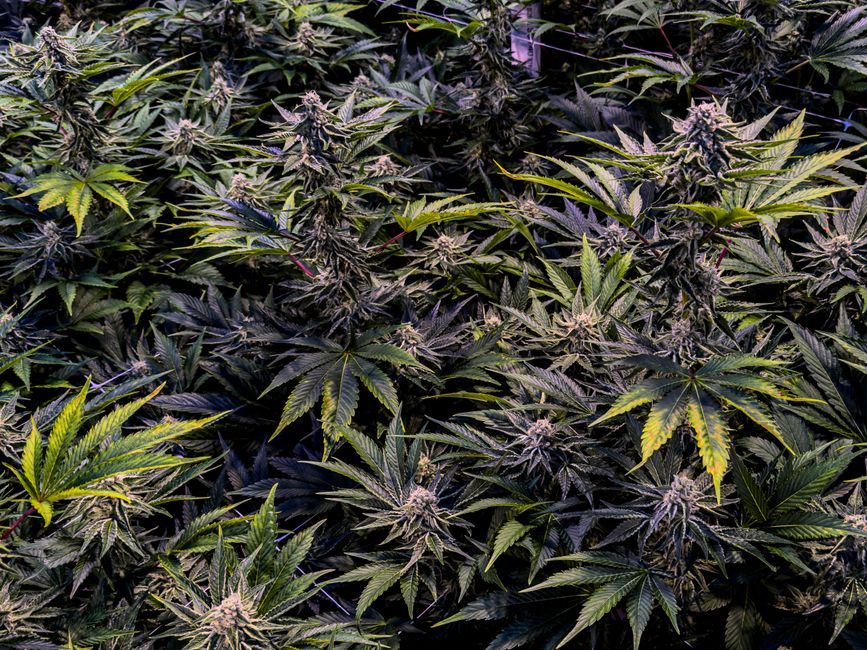
Pesticide-free describes a cultivation approach: pesticides are not applied to the crop. It is not, by itself, a laboratory result or a guarantee that a finished product contains no detectable residue. Residue questions involve what was used, how the crop was handled, possible environmental exposure, and what testing reports for the particular batch.
Organic cannabis is often used to describe a production philosophy focused on avoiding certain inputs and caring for soil and plants. Cannabis shoppers should not assume that the word organic on a product automatically represents a specific third-party certification. Look for a clear explanation of the farm’s practices and the product’s available testing information rather than relying on a label alone.
California’s rules also make clear that pesticide policy is not a simple choice between unrestricted use and a total ban. According to the California Department of Pesticide Regulation, a pesticide meets its criteria if the active ingredients found in the product are a minimum risk (25(b)) product, which the U.S. EPA and DPR have determined to be safe, effective, and exempt from registration due to the product’s low-risk nature.
That regulatory distinction is useful, but it does not make every legally compliant cannabis product pesticide-free. A shopper choosing for a specific cultivation preference should ask what the producer actually does, then consider any batch-level documentation available.
Flower, extracts, and edibles are not interchangeable
For flower, the relevant questions include how the crop was grown, how it was dried and cured, and whether test information is associated with the product. Extracts and vape cartridges involve processing cannabis material, so shoppers should not assume the flower’s growing claim answers every question about the final extract or cartridge.
Edibles require another layer of attention. The cannabis ingredient has a cultivation history, while the finished edible has its own ingredients, serving information, and handling details. A shopper who values pesticide-free inputs should check what the edible is made with, not infer its full ingredient profile from a farm’s cultivation approach.
The available research also cautions against treating all product formats or markets as identical. A study titled Comparison of State-Level Regulations for Cannabis Contaminants and Implications for Public Health identified a failure rate of 2.3% for flowers and 9.2% for extracts in the California samples. Those figures are specific to the samples in that study, not a prediction about a product you are considering.
How to choose cannabis that fits your priorities

Start with the claim you care about
Before comparing strains, decide what pesticide-free means for your purchase. Some shoppers want a farm that does not apply pesticides during cultivation. Others want a finished-batch test report, clear information about extracts, or ingredient details for an edible. These are related questions, but each requires different evidence.
A useful product conversation is specific. Ask whether the claim applies to the cultivation process, the finished batch, or both. If a seller says a product is tested, ask whether the documentation is for that product and batch, and which contaminants the report covers. Do not treat the word tested as a substitute for reading what the test actually says.
State rules are not identical, either. A regulation from another state should not be mistaken for California requirements. For example, New Jersey Administrative Code § 17:30-10.9 says a cannabis cultivator shall not apply pesticides as defined under its regulations, except for a pesticide deemed minimum risk by the U.S. EPA under 40 CFR 152.25(f) and exempt from registration. That is a New Jersey rule, not a description of California law.
Match the product format to your decision
- For flower: Compare strain, cultivation information, and batch-specific test details where available. A strain name does not tell you how the crop was grown.
- For extracts and vape cartridges: Check what type of cannabis input is described and whether available test information refers to the extract or finished product.
- For edibles: Review the cannabis ingredient, the rest of the ingredient list, and the serving information. A pesticide-free cultivation claim does not answer questions about every ingredient.
- For medicinal use: Keep a record of the product format and label details that matter to your routine. Product choice and response are individual, and no cultivation claim guarantees a health outcome.
- For sustainability priorities: Ask how a farm describes its growing methods and inputs. Avoid assuming that one pesticide statement proves every aspect of environmental performance.
Pro Tip: Save a photo of the product label and any batch report you receive. If you compare flower with an extract or edible later, those records help you avoid treating distinct products as though they share the same test documentation.
Read a report as carefully as a label
A laboratory report is useful only when its scope is understood. Check the product name or batch identifier, the test date, and whether the panel includes the contaminant you are researching. A report with a limit of quantitation is not necessarily claiming that no molecule exists; it describes what the lab can quantify under its method.
California’s testing rules specify laboratory reporting thresholds for listed pesticides. According to the California Department of Cannabis Control regulations, for each pesticide listed in Table 1, the licensed laboratory must establish a limit of quantitation (LOQ) at or below the indicated action level for that pesticide. For shoppers, this is a reason to read the report’s scope and results rather than reduce the document to a pass label.
What happens after you choose a product
A practical buying sequence
- Set your priority: Decide whether your main concern is pesticide-free cultivation, batch-level test information, product format, or a combination. This keeps a strain preference from distracting from the question you actually want answered.
- Identify the format: Choose flower, an extract, a vape cartridge, or an edible based on the product type you are shopping for. The relevant ingredient and testing questions differ by format.
- Read the product information: Check the label for the product identity, ingredients where applicable, serving details for edibles, and any batch identifier. If information is missing, do not fill in the gaps with assumptions.
- Ask a focused question: Ask what the producer means by pesticide-free and whether available test documentation matches the product or batch. A clear answer should distinguish cultivation practices from laboratory findings.
- Compare documentation: Review the report’s product or batch match, date, test panel, and stated results. A test for one category of contaminants does not establish results for every other category.
- Keep the details: Save the label or report with your purchase notes. This is particularly useful when comparing different formats or returning to a product you have considered before.
Avoid common interpretation errors
- Equating legal use with no use: A pesticide permitted under a particular state’s rules is not the same thing as a crop grown without pesticide applications.
- Assuming a clean-looking flower proves anything: Appearance and aroma do not identify the cultivation inputs or replace batch-specific testing.
- Applying flower details to an edible: The cannabis input and the finished food have separate ingredient and product information.
- Reading a pass result too broadly: A result applies to the test panel and sample described, not automatically to every possible contaminant or every batch from a brand.
Washington’s action-level rules offer another example of why regulatory wording should be read in context. According to Washington Administrative Code § 314-55-108, the action level for all other pesticides that are not listed in the table or not allowed under subsection (1) is 0.1 ppm. That specific threshold applies to Washington’s rule, not as a universal standard for all cannabis products.
Pro Tip: If a report lists an LOQ or an action level, note which pesticide and product it refers to. A number without its test context is easy to misread, especially when comparing flower with an extract.
Our perspective
What we stand behind
We have farmed cannabis in Trinity County as a family-owned micro grow operation since 2016. Our stated approach is to grow our products without pesticides or synthetic fertilizers, using sustainable farming practices and focusing on the quality of the crop. We believe shoppers deserve a plain explanation of that approach, without turning a cultivation choice into a claim that every product guarantees a particular health effect or has zero possible residue.
We would avoid making a decision from a single word on a package. A pesticide-free growing practice matters, but it is not a substitute for understanding the product format, ingredient list, and batch information. We also would not treat every input or every legal standard as equivalent. In California, the state has published criteria for legal pesticide products, while our own approach is not to use pesticides in cultivation.
Our sustainable cannabis farming practices explain more about the farming perspective behind our work. Our advice is to compare what a producer says it does with what the specific product information can show, and to keep those two kinds of information distinct.
When to talk with a cannabis professional
Bring product-specific questions
Get help from a knowledgeable cannabis retailer, licensed testing laboratory, or qualified medical professional when your question concerns a test result you cannot interpret, a product’s regulated status, or cannabis use alongside a medical condition or medication. A producer can explain its cultivation practices, but it should not replace a clinician for personalized medical advice.
Bring the package or a clear photo of its label, the batch identifier, any certificate of analysis, and the exact question you want answered. For an edible, include the ingredient and serving information. For a cartridge or extract, identify the specific product rather than relying on a flower report from the same brand.
A good provider should explain whether information applies to cultivation, a tested sample, or the finished product. They should identify what a report does and does not cover, explain unfamiliar terms such as LOQ, and say plainly when they do not have the documentation needed to answer. Be cautious if anyone presents a pesticide-free claim as proof of a medical result.
Frequently asked questions
Does pesticide-free cannabis mean there is no residue?
Not automatically. Pesticide-free usually describes a cultivation practice, specifically that pesticides are not applied to the crop. It is different from a laboratory statement about a tested sample. Environmental exposure, handling, testing scope, and the reporting threshold all affect what a test can establish. For a particular product, look for information tied to its batch and read which compounds the laboratory tested.
Is organic cannabis the same as pesticide-free cannabis?
The terms are related in how many shoppers think about production, but they should not be treated as interchangeable proof. Organic cannabis can describe a production philosophy, while pesticide-free refers to avoiding pesticide applications. Neither term alone tells you what a laboratory tested or whether a particular product has a third-party certification. Ask what the grower means and check any product-specific documentation.
How should I evaluate a cannabis pesticide test report?
Start by matching the report to the product or batch you are buying. Then review the test date, the pesticide panel, the results, and any stated limits of quantitation or action levels. A report answers questions only within its scope. If the document is for flower, do not assume it represents an extract or edible made with different material or processing.
Do pesticide-free claims apply to edibles and vape cartridges?
A farm’s cultivation claim relates to the cannabis it grows, but an edible or vape cartridge is a distinct finished product. For an edible, review both the cannabis ingredient information and the rest of the ingredient list. For a cartridge, look for information about the extract and its applicable testing. Do not infer every finished-product detail from the growing method alone.
What should I ask a cannabis seller about pesticide-free products?
Ask what pesticide-free means in the seller’s description, whether that refers to cultivation or finished-product testing, and whether available documentation matches the item’s batch. For edibles, ask about the cannabis input and read all ingredients. For flower or extracts, ask what test panel is available. Specific questions make it easier to compare products without assuming that a marketing phrase answers every concern.
How Trinity Growers Co. approaches pesticide-free cannabis
Farm practices and product conversations
At Trinity Growers Co., our work centers on cannabis cultivation in Trinity County, California, with products grown without pesticides or synthetic fertilizers. We focus on sustainable farming and on producing high-quality cannabis with a family-owned micro grow farm’s attention to the crop. Those practices inform our organic cannabis sales and the way we talk about product choices.
- Cannabis cultivation: We grow cannabis using our pesticide-free, no-synthetic-fertilizer approach.
- Organic cannabis sales: We offer consumers cannabis products that reflect our farm’s stated cultivation values.
- Edibles and vape cartridges: Consider the specific finished product and its information rather than assuming cultivation details answer every question about the format.
If you want to discuss our cultivation approach or product questions, contact Trinity Growers Co. about pesticide-free cannabis. We are glad to help you get clear on what our farming practices mean for the products you are considering.
Conclusion
Make the claim specific
The most useful next step is to identify exactly what you want to verify: pesticide-free cultivation, testing for a particular batch, or information about an edible or extract. Then compare that question with the documentation available for the product. Pesticide-free cannabis is a meaningful farming choice, but it is not a stand-in for every test result or a promise of a medical outcome.
For pesticide-free cannabis Trinity Growers Co. grows without pesticides or synthetic fertilizers, pairing that commitment with sustainable farming in Trinity County. If you want to understand our approach or discuss a product, reach out to our team.
Related reading
- Exploring the Flavor Profiles of Organic Cannabis at Trinity Growers Co.
- Navigating the World of Organic Cannabis Products at Trinity Growers Co.
Sources
- Department of Pesticide Regulation Releases List of Pesticide Products That Meet California’s Criteria for Legal Use on Cannabis
- N.J. Admin. Code § 17:30-10.9 – Cannabis cultivator quality control; pesticide use limited
- Wash. Admin. Code § 314-55-108 – Pesticide action levels
- Text of Regulations – Department of Cannabis Control
- Comparison of State-Level Regulations for Cannabis Contaminants and Implications for Public Health